Launch Party 3
MARKETING

Marketing your product comes into focus once samples are made but you should be envisioning the launch and thinking about how your designs will come to market at the very beginning. Craft the story you are trying to tell, understand how each design supports your overarching aesthetic and how that mood can be captured during the photoshoot. We are inundated with imagery and information. To make sense of something new, people need to discover a thread that carries thru the product launch.
I recently received an email that Crate and Barrel is relaunching Athena Calderone’s first collection because most items sold out. It’s inspiring! So today, I will use a furniture collection launch to illustrate the process a designer goes through to market their collection and how to work with brands for a seamless launch.
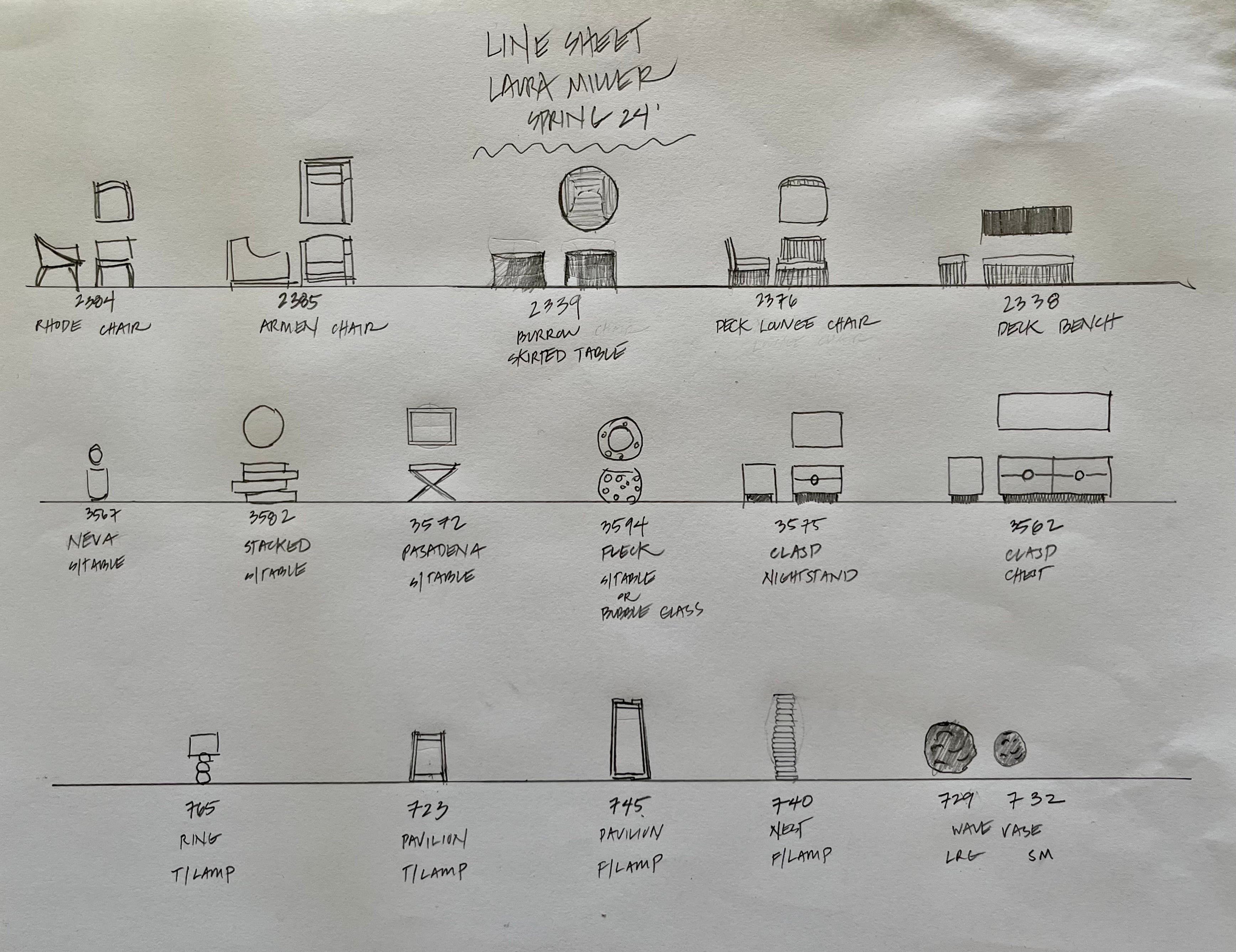
As the collection is culled it’s important to keep the designs organized and top of mind. Create a Line Sheet, a cheat sheet laying out the collection with its working name. Your sketches will be put into CAD and the line drawings used for the Line Sheet. It helps to have everything on one page / seen all together so you can start to match designs together, creating vignettes.
LINE SHEET
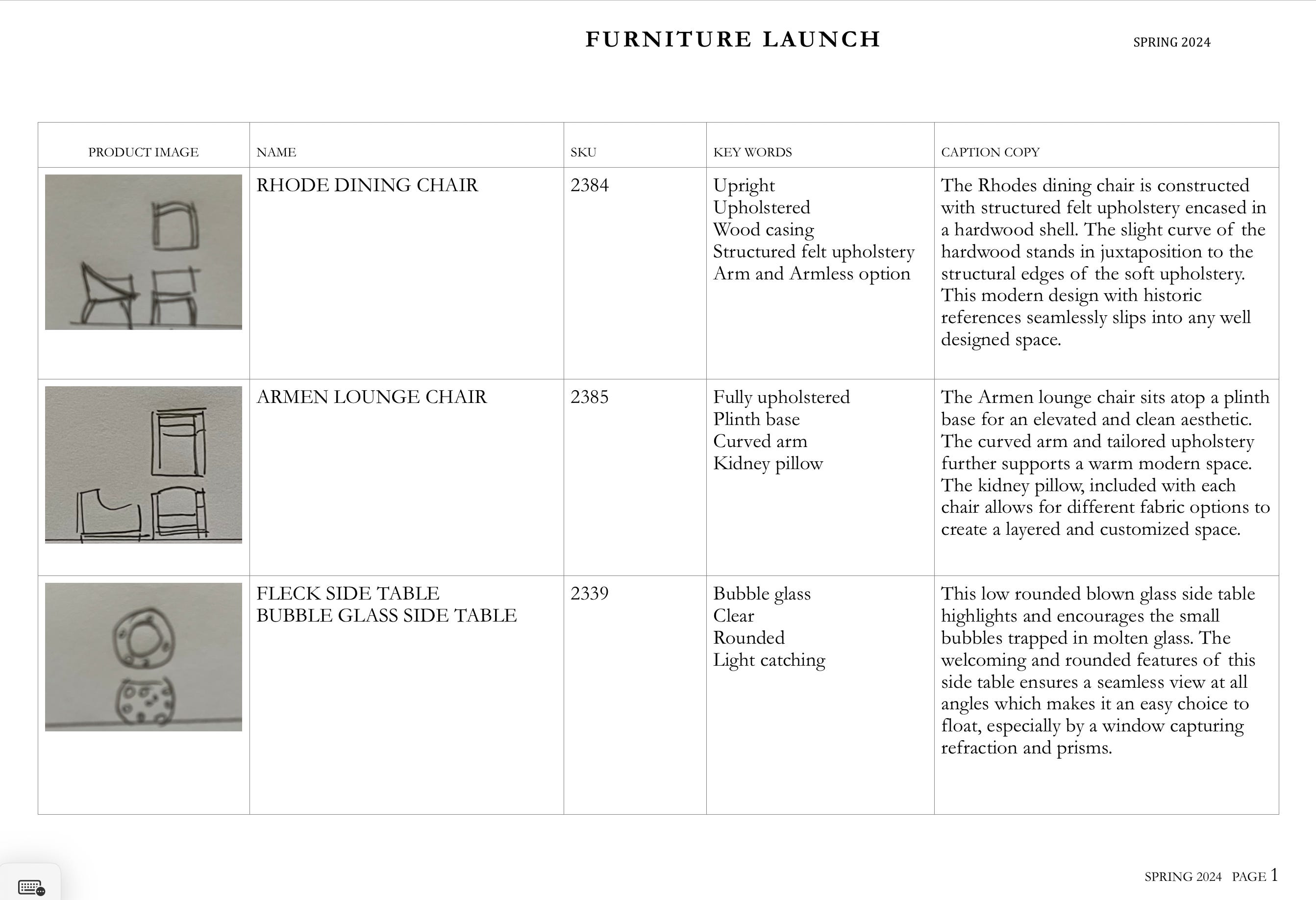
In addition to the Line Sheet also create an Icon Sheet, see below. Each design will need copy that helps the sales staff talk about the item. Detail how it’s made; unique materiality, what makes it special, any interesting feature you want to highlight.
ICON SHEET
Ask the Marketing Team (or yourself) for a Marketing Plan and how the images will be used. Determine if the company wants to do printed material. I have found most companies have removed printed collateral from the budget.
However, printed materials can make an impact so consider where the funds should be allocated. Postcards for a public appearance or an insert / ribbon / sticker detailing the collab, sent with the merchandise can be an effective use of the marketing budget.
The company may only want to use the imagery digitally. In addition to a social media campaign and eblasts, the company could produce a digital brochure. Knowing how the images will be used will help you to define the shot list, create a hero shot and reinforce the story you are trying to tell.
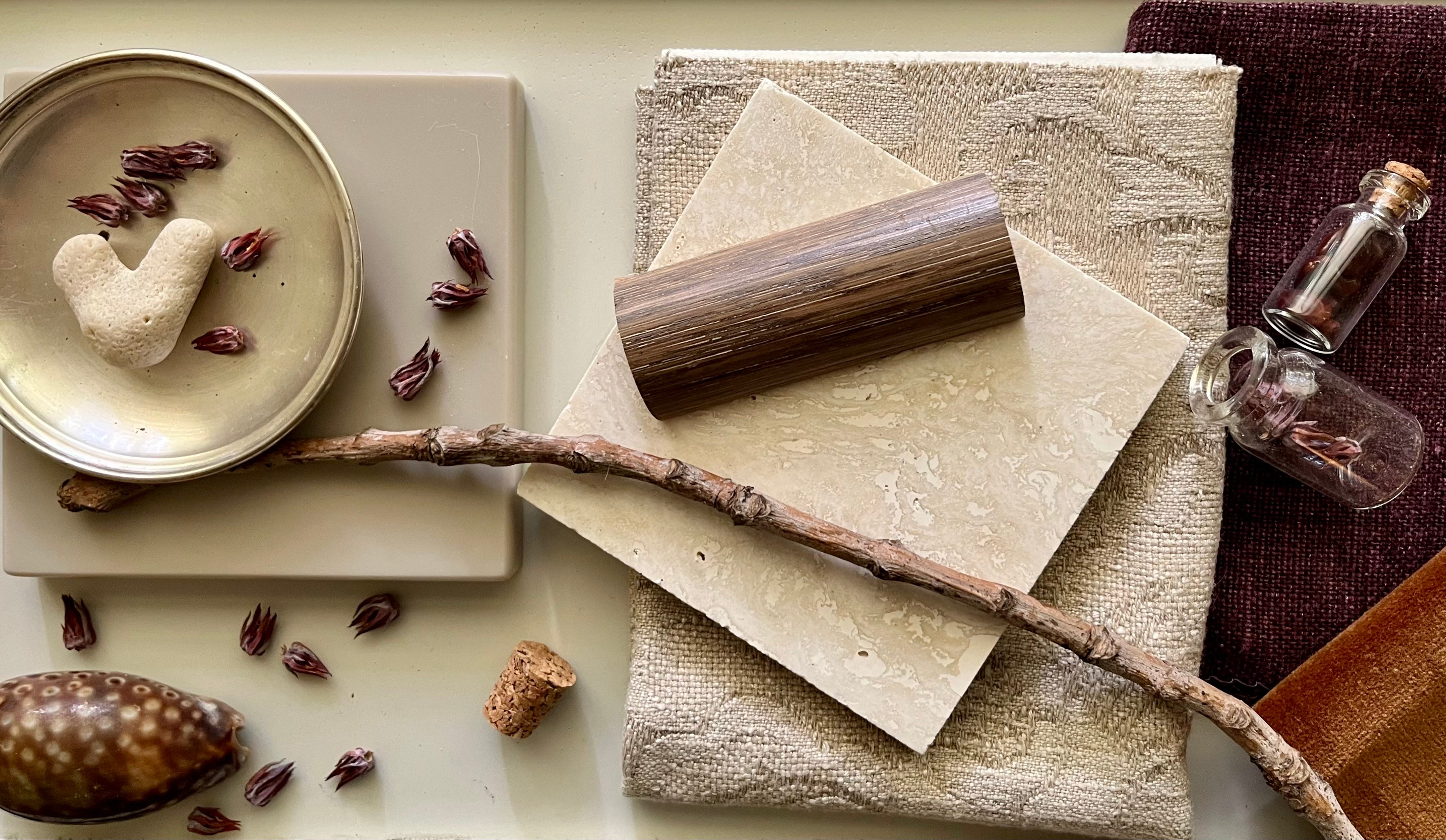
During a one day photoshoot, expect to photograph 2-3 room scenes, as many vignettes as you can, but prepare 6-7 shots and 4-5 overhead or bulletin shots displaying materiality, finishes, fabrics, inspiration, shapes, anything that carries the thread. I like to quickly sketch out the shot list, you don’t need to aim for perfection here..clearly! It’s only for visual reference and helps storyboard the day.
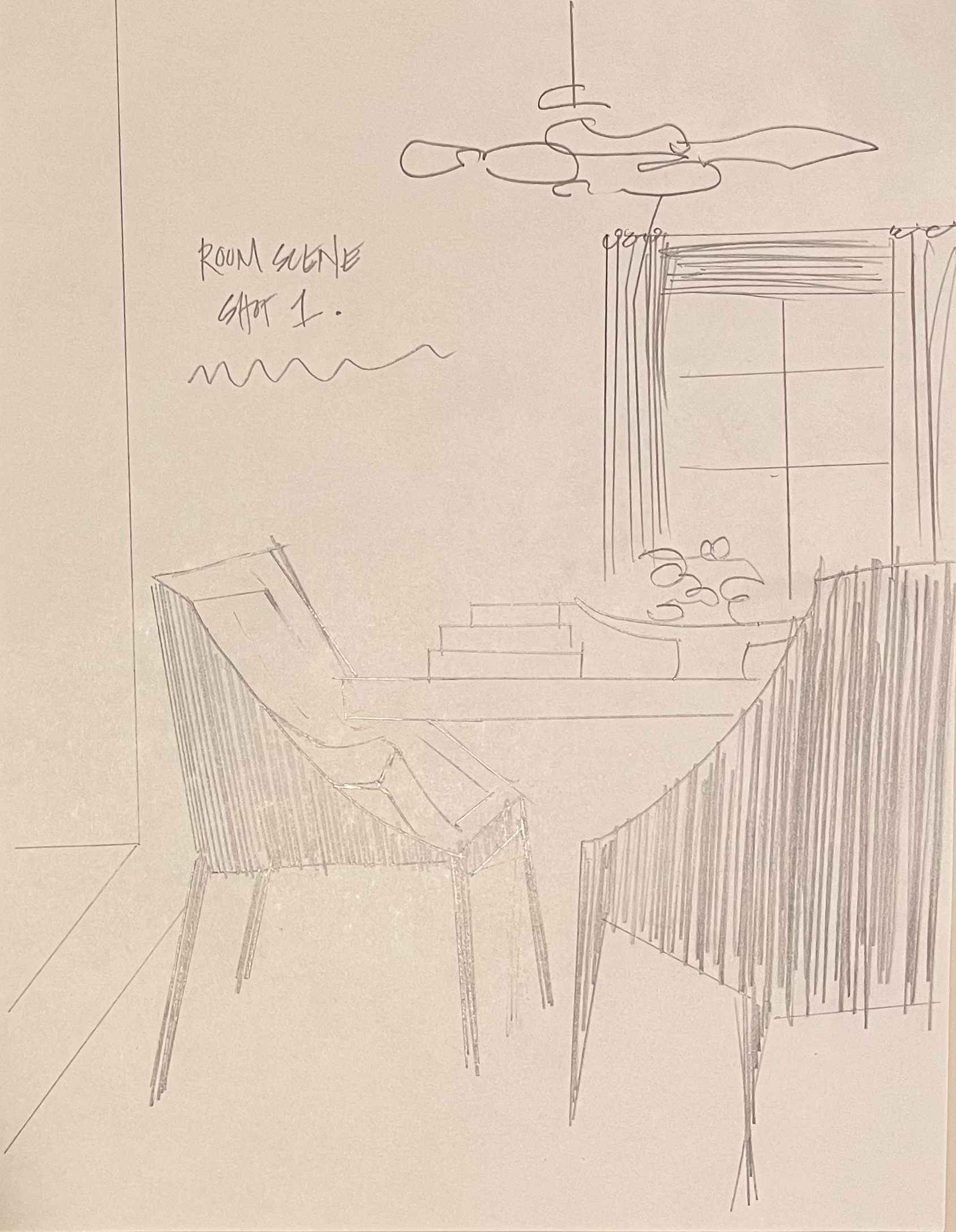
Prepare as much as you can prior to the photo shoot. Layout tray shots, list items in each shot, prepare the flora and set as much as you can in advance. The room scenes take longer to capture than you might expect so use the time when the furniture is being moved about to line up and layout the vignette shots and props. Prepare the bulletin board in advance so it can be trotted in, photographed and you can move on.
Once the silhouettes of each design and room scene images are prepared, the company, or your company, will layout the material. At the very least, ask for final approval on all marketing materials so your brand and messaging isn’t lost in the final deliverables. Companies may have standards for all marketing materials and it’s best to find all of that out at the start of the marketing campaign so you don’t run into challenging conversations as they are being pushed to press. Onward to launch!